CINEMA IS A LANGUAGE
This is where you learn to speak it.
Writing
Directing
Post-Production
Sound
Get The Full Curriculum
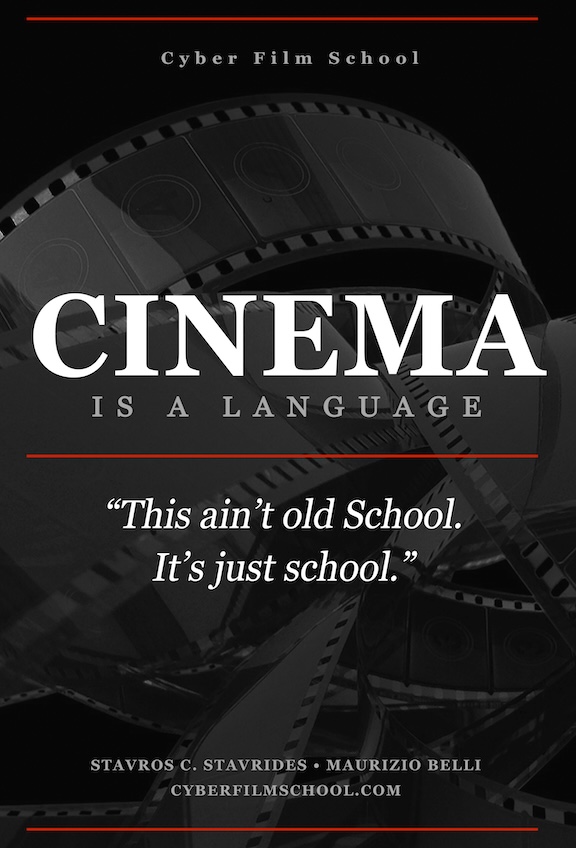
357-page interactive textbook.
A director’s toolbox reimagined for Apple Books—lifetime updates.
Not for Casual Dabblers
This is for those ready to do the work.
It’s an interactive curriculum designed for people who:
➡︎ Want to think, see, and create like filmmakers
➡︎ Care more about the craft than a passing trend
➡︎ Are done with tips and hacks
➡︎ Want structure, not chaos
What You’ll Learn — And Why It Changes How You See
Cinema is built on a single truth: audiences don’t watch films, they experience them. Every tool a filmmaker uses — the frame, a cut, light, sound — is designed to move people emotionally without them knowing how it’s being done.
That’s not technique. That’s craft.
Every chapter in this book teaches one element of that craft through the same sequence:
➡︎ Understand the principle
➡︎ Feel it work through exercises and assignments in every chapter as you shoot and edit on your own device — in your living room, a hallway, wherever you are
➡︎ Then carry that instinct into the next chapter.
No hacks. No fluff. Just rigorous structured
film education for serious students of cinema.
⬅︎ SCROLL CHAPTERS ➡︎
You don’t just study cinema’s magic. You make it happen chapter by chapter
By the end, you won’t just know the language of cinema — you’ll have begun to find your own voice in it.
Each chapter builds on the last.
By the end, you won’t just know the rules — you’ll understand why they work, when to break them, and what it costs an audience when you don’t.
You’ll have begun your journey toward finding your own voice in the most powerful storytelling medium ever created.
Download a sample:

357 Pages • 200 Videos •700 Images
FREE LIFETIME UPDATES
★★★★★“Outstanding publication. A full film education in one well-designed e-book. Great integration of video and supporting graphics to illustrate key points with
A dynamic and easy-to-use interface.“
~ JULIAN GRANT, FILMMAKER & ASSOCIATE PROFESSOR , COLUMBIA COLLEGE, CHICAGO
➡︎ Watch the Video
(60 SECONDS)
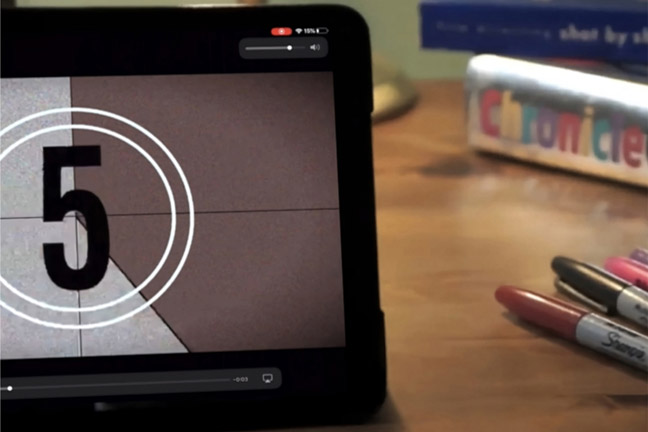
“This ain’t old school.
It’s just school.”
What People Are Saying
⬅︎ SCROLL REVIEWS ➡︎
A Future-Proof Foundation
Embrace a solid foundation with a future-proof, classic combo of theory, technique, history, critical thinking, and creative skills that transcend technological changes, whether camera, mobile devices, or AI.
While tools and technology rapidly change, a solid grasp of visual grammar is the backbone of both film education and a lifelong career.
This interactive, self-guided textbook is a director’s toolbox, reimagined for Apple Books.
Movie watchers understand the language of Cinema. Movie makers speak it.
It’s an interactive multimedia e-textbook you purchase and download from Apple Book Store.
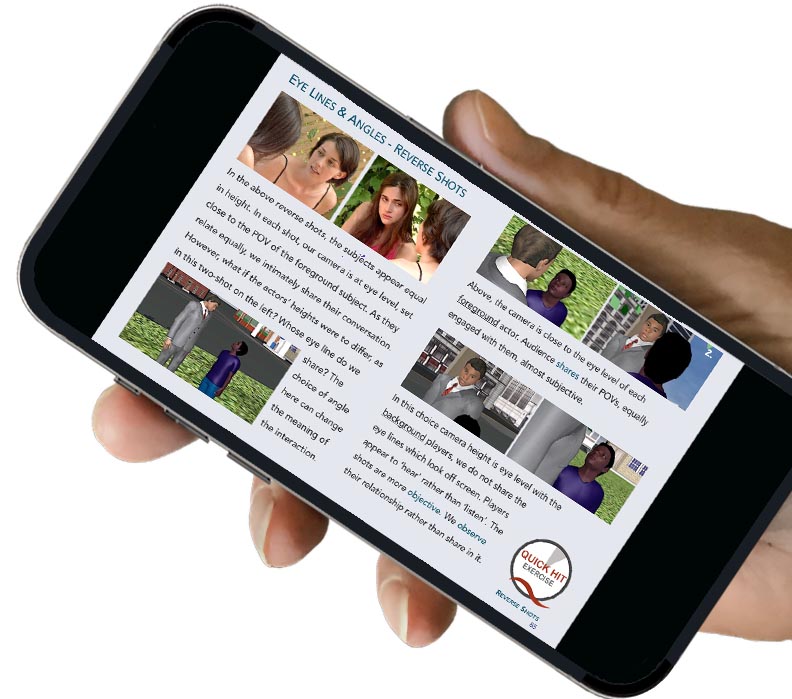
It lives in the Apple Books app on your iPad, Mac, and iPhone, and synchronizes across devices.
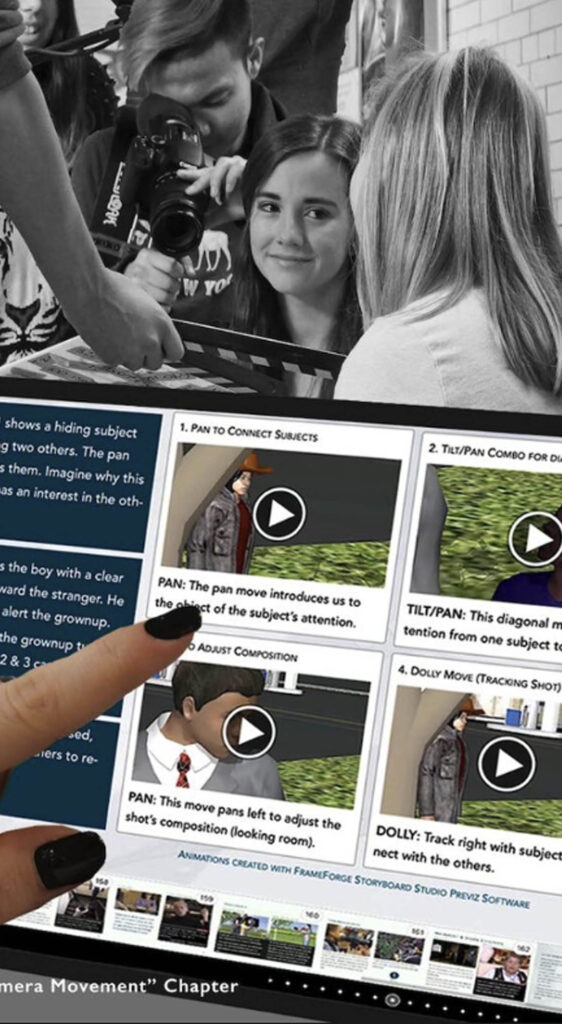
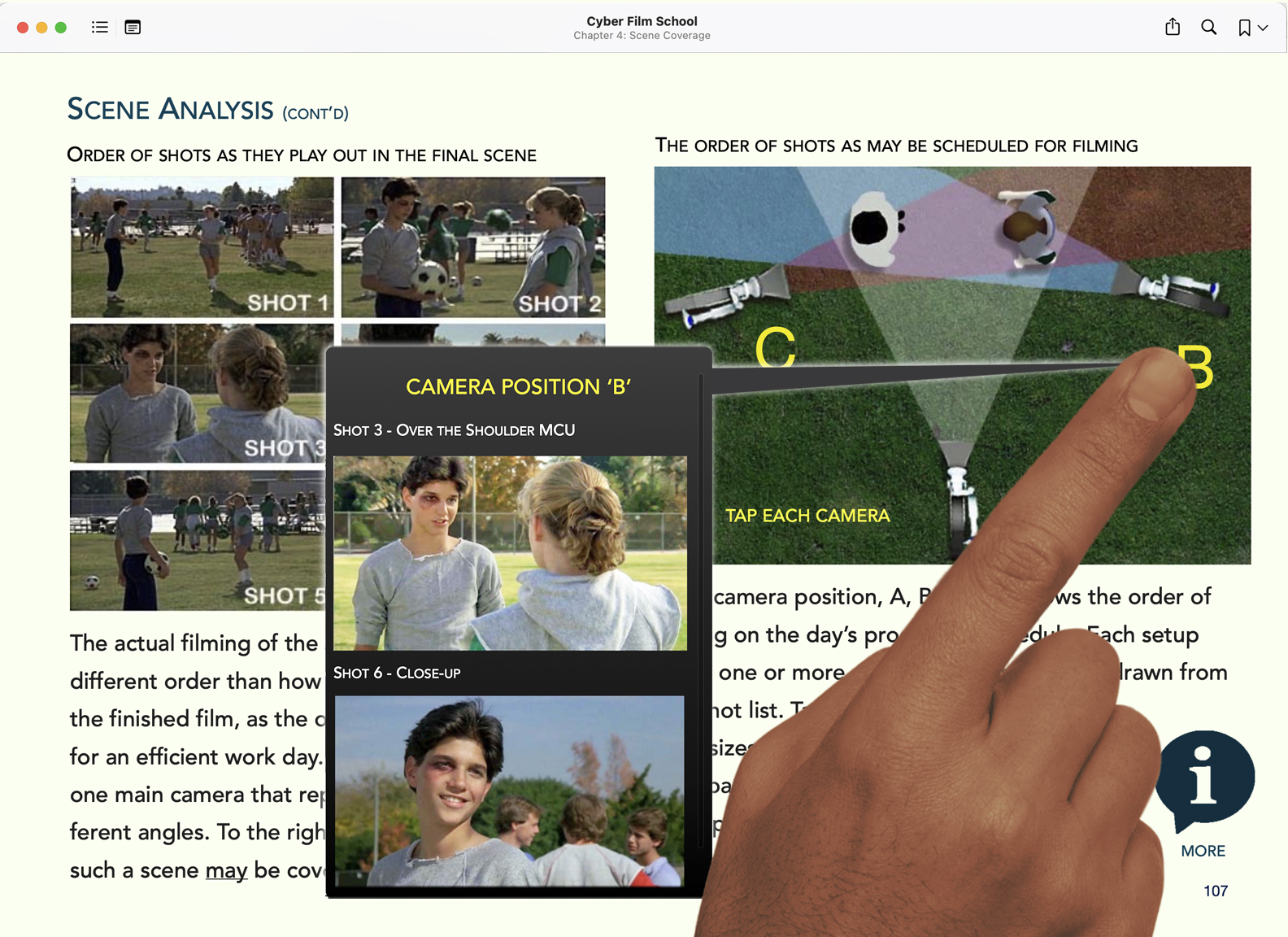
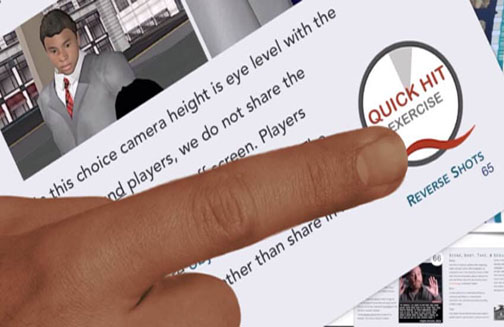
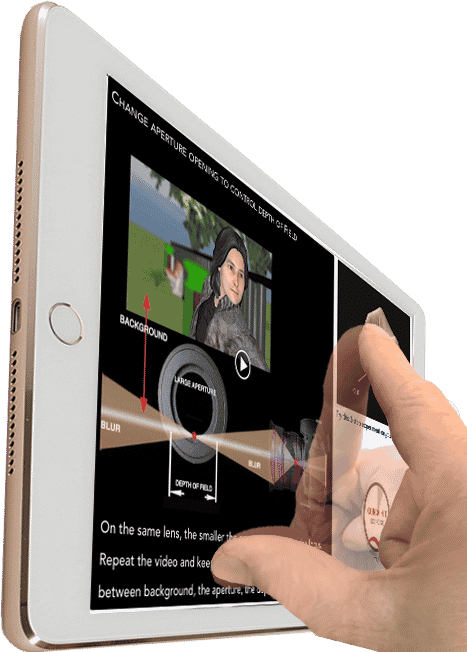
The work features interactive diagrams, audio, video, image galleries, pop-ups, quizzes, and web content.
You can customize your copy with highlights, notes, flashcards, and more.
Key Features
Complex rules, principles, and techniques are easy to grasp and apply through study, practice, review, and discussion. Each essential film concept is reinforced in several ways:
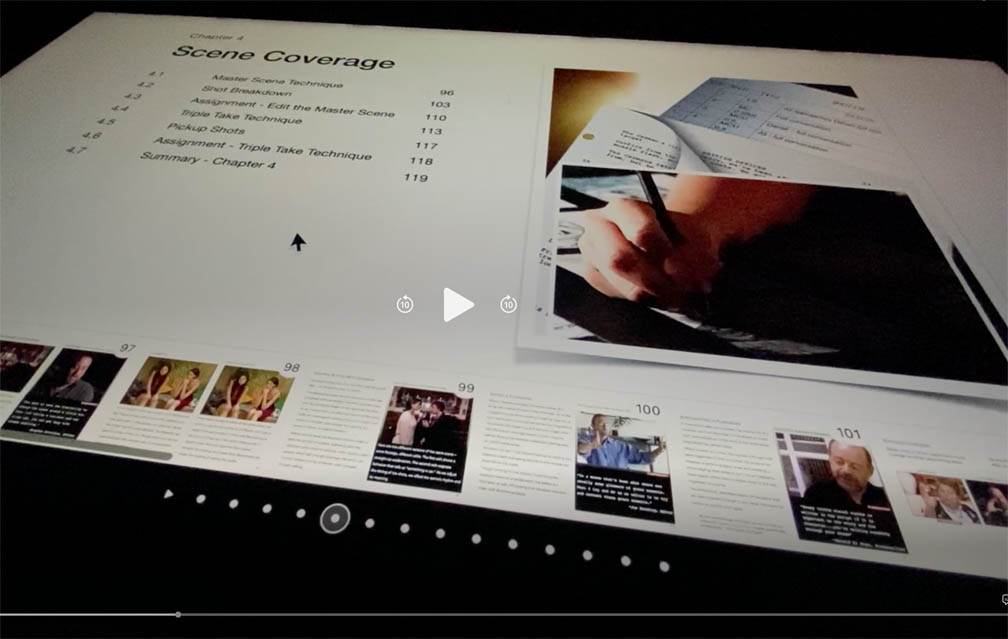
Whether you’re an aspiring filmmaker exploring your passion or an educator looking to enhance your teaching curriculum, Cyber Film School Filmmaking Textbook’s adaptable structure and comprehensive content make it a valuable resource for individual learners at home and teachers in the classroom.
357 Pages
Over 200 Videos
Over 700 Images & Illustrations
ISBN 9780968878521
by Stavros C. Stavrides & Maurizio Belli
Apple ID is required for purchasing or gifting Cyber Film School.
Apple Books will indicate your country’s purchase price.
Includes lifetime free updates
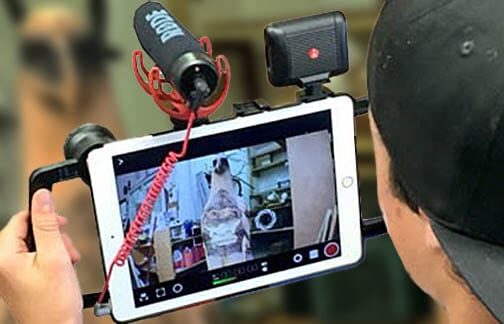
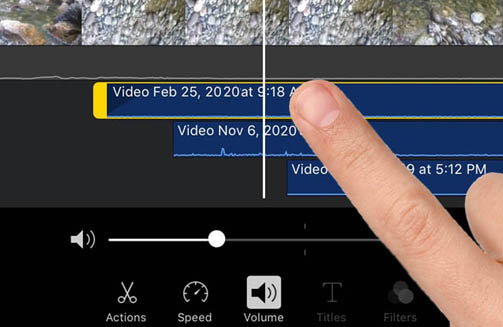
“Learn, Shoot, and Edit on One Device, or use your gear of choice.
Your copy of the book lives in the Apple Books app on your devices and synchronizes on your iPad, Phone, and Mac as you use it. You get updates for life through Apple, just like an app.
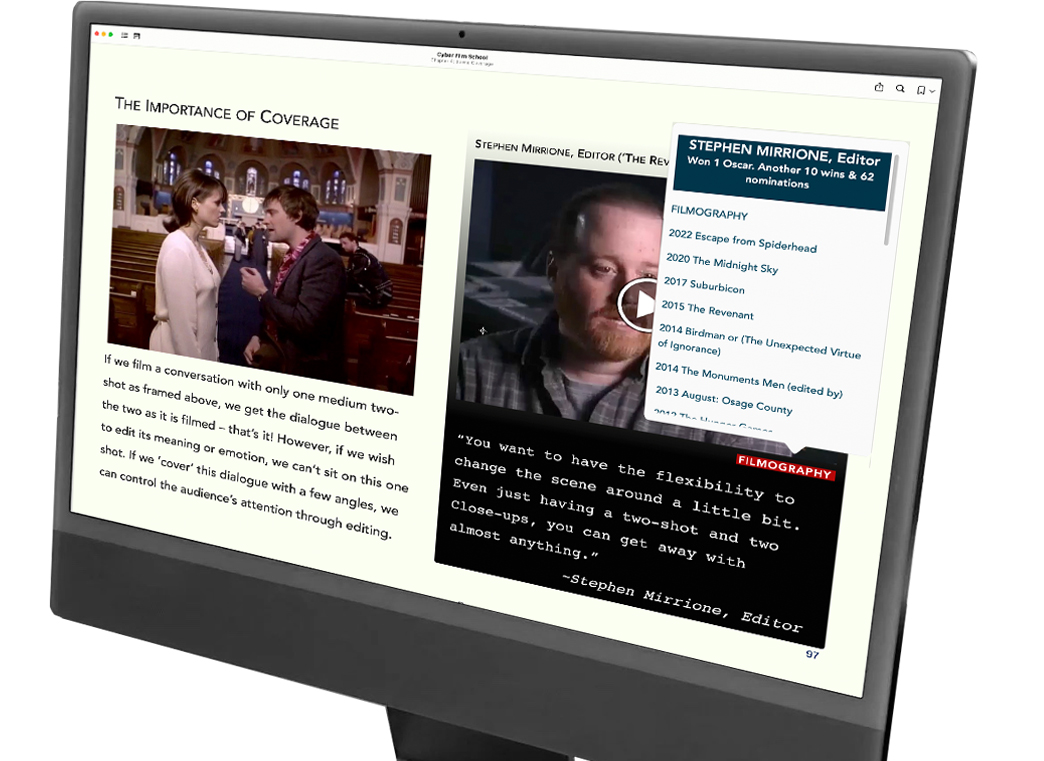
Personalize Your Workbook!
Highlight passages, record and store notes to review, share, and create flip cards as you develop skills and reinforce your knowledge–just one example of how this platform facilitates independent learning.
